About Shivericks Pond Trail & Park
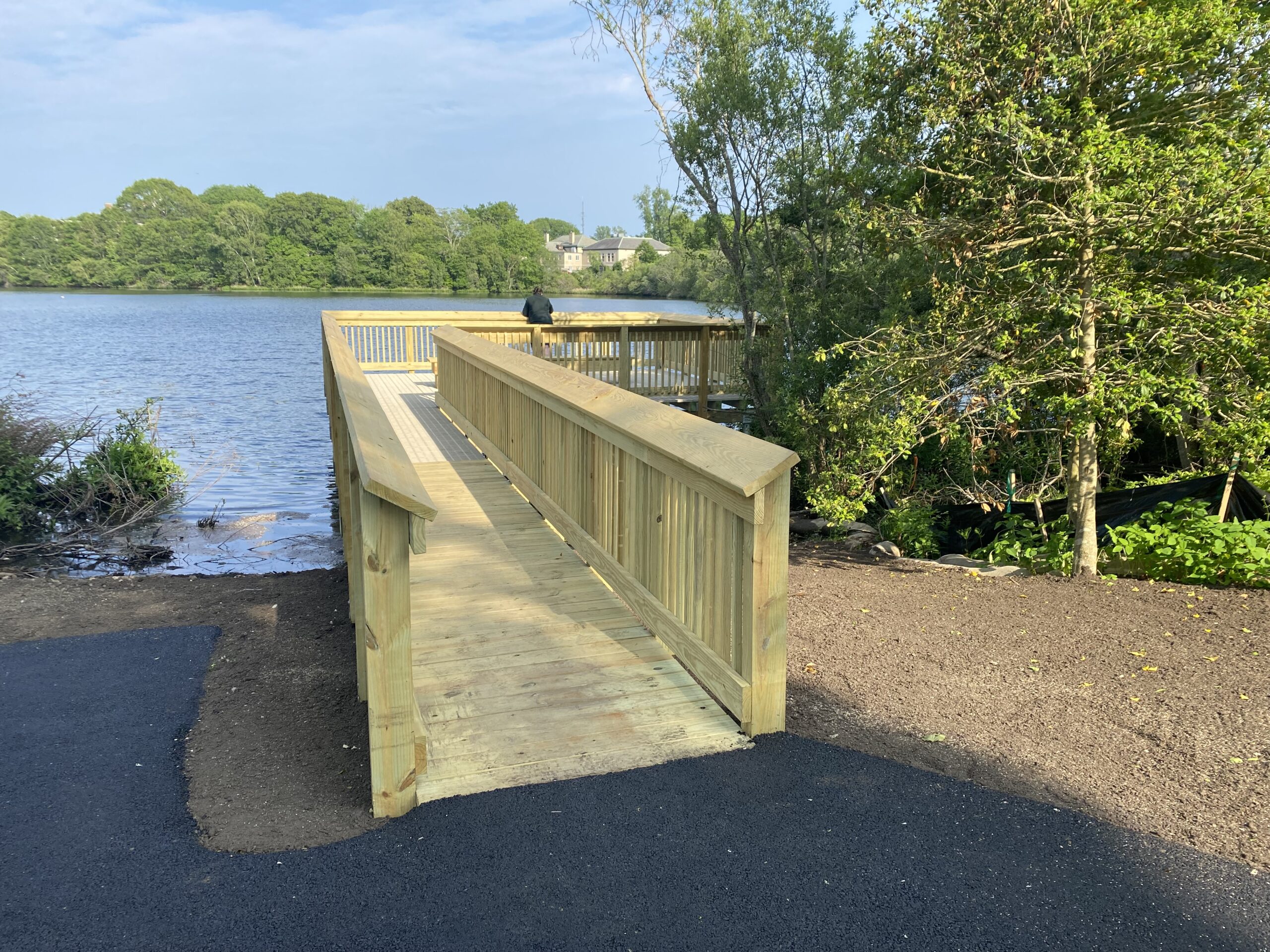
ACCESS: The entrance to the Shivericks Pond Trail and Park does not have an official street address. The park is located several hundred yards west of Katharine Lee Bates Road’s intersection with Post Office Road. Public parking is across the street. This half-acre park in the heart of downtown Falmouth features accessible pathways, wheelchair-compatible picnic table and an ADA-compliant pond lookout platform that is a great fishing spot for persons of all abilities. Plans have been drawn up for a narrow trail to loop the entire pond.
HISTORY & GEOGRAPHY
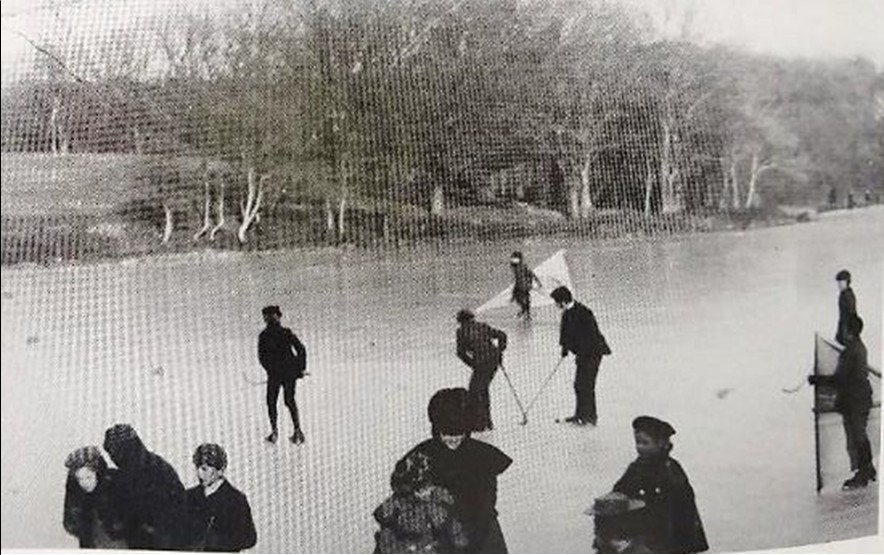
Shivericks Pond has been at the center of the community for hundreds of years – geographically, but also as a hub of activities: boating and fishing in summer, and ice-harvesting, -skating and -fishing in winter. The lot became orphaned in the 1950s when the town built Katharine Lee Bates Road. Seventy years later it was a tangle of invasive plants with a small mowed section providing pedestrian access between the Lawrence School junior high and downtown.
In 2015, the lot was technically owned by Bank of America, which was housed in the brick bank building on the other side of Katharine Lee Bates Road. When the bank decided to sell the land at auction, the Town was not able to get funds together in time. Recognizing the importance of preserving public access between the school and downtown, as well as conserving valuable pond frontage, The 300 Committee bought the land, donating it to the town in 2021.
An ad hoc committee of citizens declared a vision to turn this neglected plot into a valuable community asset. With the town's support, the invasive plants were cleared and native trees, shrubs and pollinator plants planted. A tight network of wide, flat, hard-surfaced pathways allows visitors of all abilities to navigate the park and then make their way down to the pond viewing platform. An in-the-works narrower path looping around the entire pond will hopefully be completed soon.
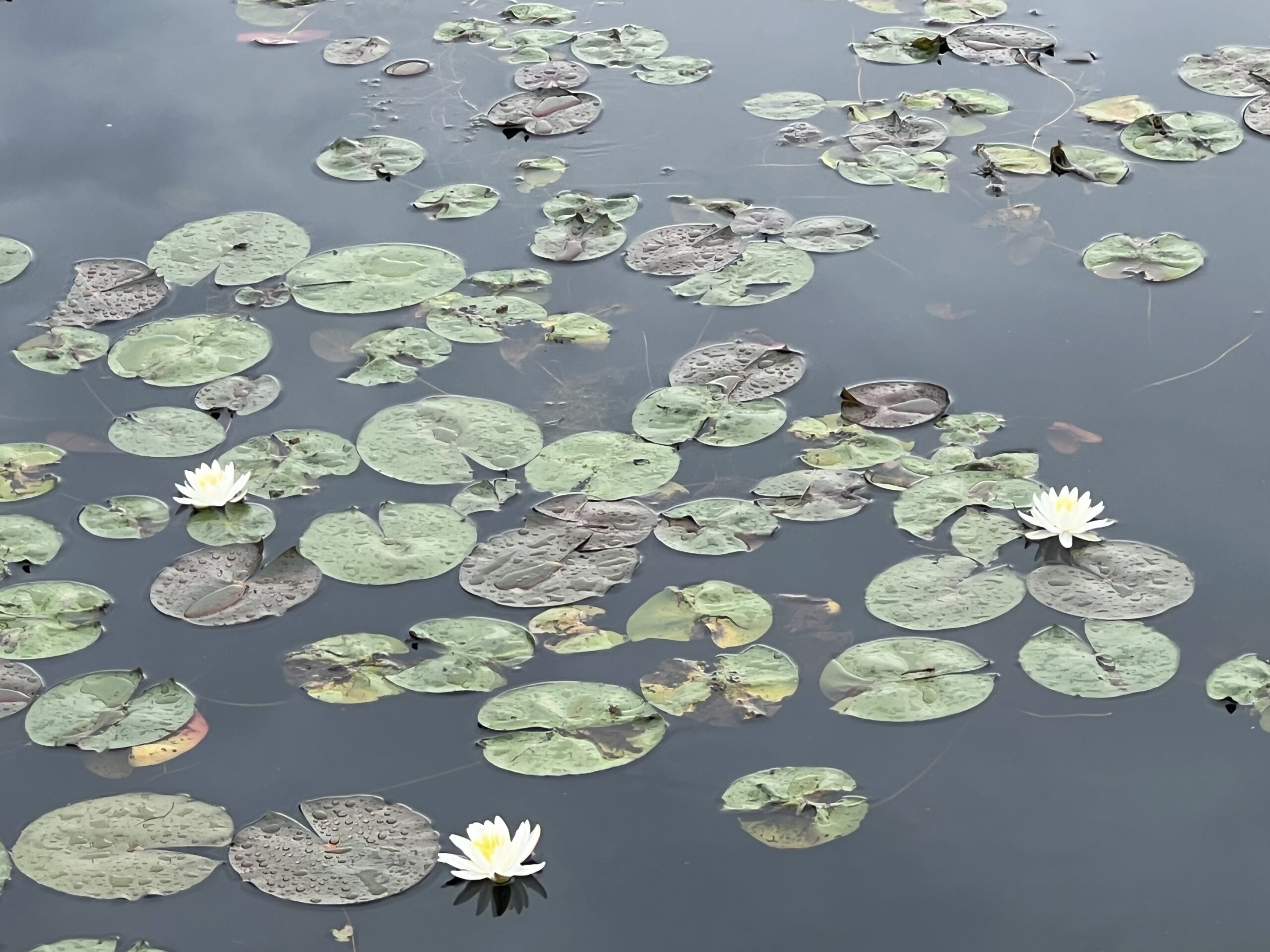
The benefits of the new native plantings are many. Once established, these plants won't need watering or fertilizing; they help protect water quality by taking up excess nutrients before they reach the pond or groundwater; and they provide food, hiding places or nest sites
for birds and the insects and caterpillars they rely on to feed their young.
A path around the pond was first proposed by Henry Fay in 1905. The town did not support the project at the time, so several private homes were built along the pond's northern shore. These can be skirted by traveling the sidewalk to reconnect with the pondside nature path behind Mullen-Hall Elementary School.
Cape Cod was formed by glaciers in the final ice-age period, 12,000-10,000 years ago. Shivericks Pond is one of almost 900 kettle hole ponds on the Cape, formed when the retreating glacier left behind huge chunks of ice buried in the sediments. Those chunks eventually melted, leaving behind scalloped bowls of earth, some of which later filled with groundwater to become kettle hole ponds, while others remain dry kettle holes.
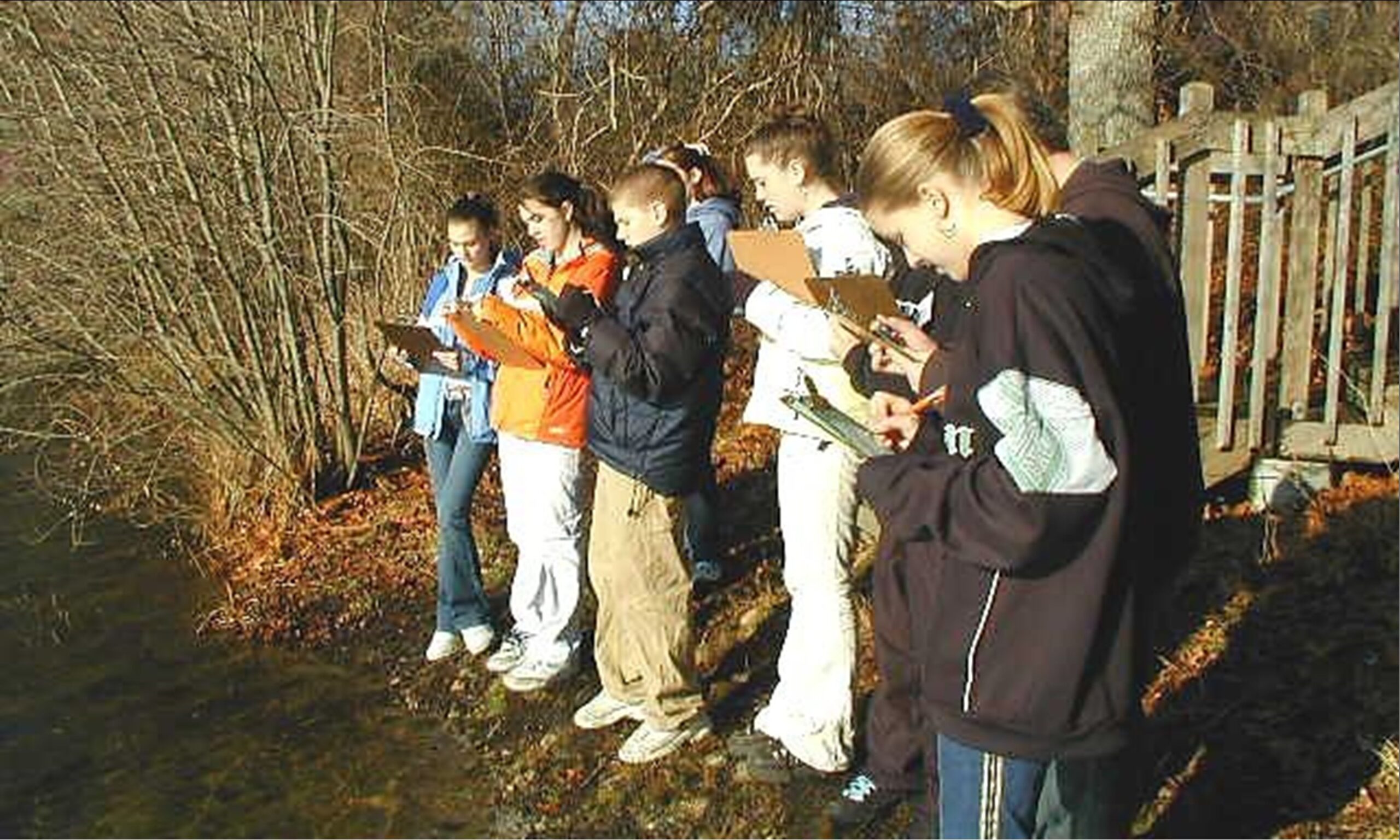
The ponds abuts both Mullen-Hall Elementary School and the Lawrence School junior high. Students from both schools go on research trips to the pond, getting hands-one experience in scientific field work by measuring temperature, inspecting microscopic aquatic life forms and journaling seasonal observations.